


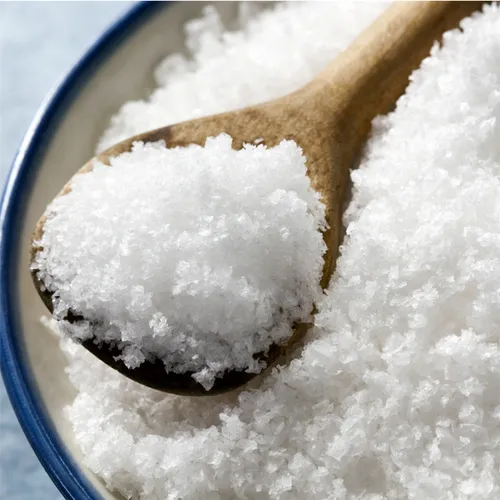
Lauric acid flakes are a solid, saturated medium-chain fatty acid (C12) derived primarily from coconut or palm kernel oil. In flake form, they are easy to measure and dissolve for various industrial and personal care applications.
Common Uses
Soap & Detergents: It is a primary raw material for making sodium laurate, which provides the rich, creamy lather and deep cleansing power found in bar soaps and shampoos.
Cosmetics: Acts as an emollient and thickener in lotions and creams to improve product texture and skin conditioning.
Skincare: Valued for its antimicrobial and anti-inflammatory properties, making it an effective ingredient in acne treatments (targeting C. acnes bacteria) and products for sensitive or reactive skin.
Industrial: Used as an intermediate for surfactants, lubricants, and plasticizers in rubber and textile processing.
Technical Properties
Chemical Formula: C12H24O2
(Dodecanoic acid).
Appearance: Bright white crystalline flakes or powder with a faint, soapy odour.
Melting Point: Typically ranges between 42°C and 46°C (108°F–115°F).
Solubility: Insoluble in water but soluble in organic solvents like ethanol, ether, and hot oils.
Safety and First Aid
While generally recognized as safe (GRAS) in formulated products, the concentrated flakes can be irritating:
Eye Contact: Can cause serious eye irritation or damage. If contact occurs, flush immediately with water for at least 15 minutes while holding eyelids open.
Skin Contact: May cause mild irritation. Wash the affected area thoroughly with soap and water.
Storage: Store in a cool, dry, well-ventilated area in tightly sealed containers to prevent oxidation.
Lauric Acid Flakes
Lauric acid flakes (typically 99% purity) are versatile saturated fatty acids primarily used in industrial manufacturing for producing soaps, detergents, cosmetics, and surfactants. Key applications include acting as an intermediate for alkyd resins, lubricants, plasticizers, and in textile processing. They are also used for antimicrobial agents in personal care.