




Polyacrylamide (PAM)
Polyacrylamide (PAM), most commonly as partially hydrolyzed polyacrylamide (PHPA) (anionic, ~20–40% hydrolysis, high MW 5–20 million Da), is a key additive in water-based drilling fluids (WBMs) for oil and gas wells, typically dosed at 0.1–1.0 lb/bbl (most often 0.25–0.7 lb/bbl or ~0.7–2 kg/m³) as powder or liquid emulsion.
Key usages include:
❖ Shale inhibition / wellbore stability
Primary function of PHPA muds; encapsulates and coats reactive shale cuttings and borehole walls via multi-point adsorption → suppresses hydration, dispersion, and swelling of water-sensitive shales (e.g., smectite-rich formations) → prevents sloughing, caving, bit balling, and stuck pipe.
❖ Encapsulation of drill solids / cuttings
High-molecular-weight PHPA flocculates and encapsulates fine drilled solids → inhibits dispersion into the mud system → maintains low solids content, cleaner mud, better rheology, and reduced dilution requirements.
❖ Viscosifier / rheology modifier
Provides yield point and low-shear-rate viscosity (synergistic with bentonite or xanthan) → improves cuttings transport and suspension, especially in low-solids or polymer-extended systems.
❖ Fluid loss control
Forms a thin, tough, low-permeability filter cake (often with bentonite or starch) → reduces filtrate invasion into permeable zones → minimizes formation damage and differential sticking.
❖ Friction reducer / drag reduction
In high-angle, extended-reach, or horizontal wells (and sometimes in coiled tubing or fracturing prep) → anionic PAM reduces frictional pressure losses in turbulent flow → lowers pump pressure and improves ROP.
❖ Flocculation / solids removal
Used in low concentrations for flocculation of fines in mud pits or centrifuges → aids mechanical solids control.
Typical applications:
-PHPA mud systems (non-dispersed, inhibitive WBMs) for shale sections, replacing dispersed ligno-sulfonate muds.
– Combined with KCl (3–10%) for enhanced inhibition in reactive shales.
– Minimal use in cement slurries (rare, low ppm as fluid-loss aid or turbulence inducer, not primary).
In short:
Polyacrylamide is the cornerstone shale inhibitor, cuttings encapsulator, and rheology enhancer in modern inhibitive water-based drilling fluids, essential for drilling troublesome shale formations with minimal wellbore instability and solids-related problems.
Poly Acrylamide
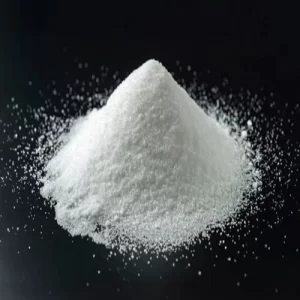
Polyacrylamide (PAM) is a high-molecular-weight, water-soluble synthetic polymer, widely used in industry as a versatile flocculant, coagulant, and viscosity modifier. It is crucial for solid-liquid separation, wastewater treatment, soil conditioning, and oil recovery due to its ability to bind particles. Available in anionic, cationic, and non-ionic forms, PAM efficiently treats municipal sewage, aids mining operations, and improves papermaking, forming stable gels with 70–90% water content.