



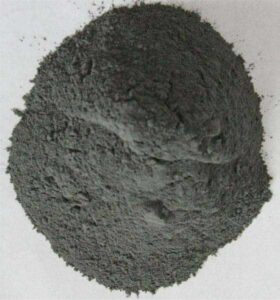
❖ Microfine Silica
Silica fume (also called microsilica) is used in oil well cementing (primarily during primary and remedial cementing operations) at typical dosages of 5–40% by weight of cement, most commonly 10–30%. Its ultra-fine particles (~0.1–0.2 μm) react pozzolanically with calcium hydroxide to form additional C-S-H gel.
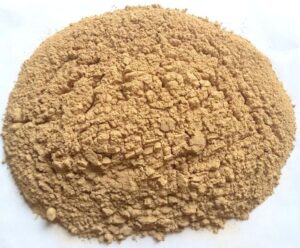
Dead burnt magnesite (also called dead burned magnesia, DBM, or hard-burned MgO) is used as an expansion additive in oil well cement slurries, typically at dosages of 1–10% by weight of cement (most commonly 2–6% BWOC), especially in high-temperature wells.
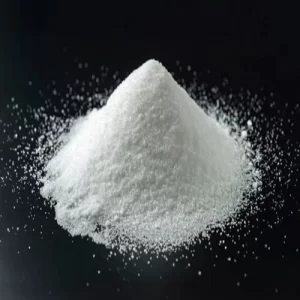
Polyacrylamide (PAM) is a high-molecular-weight, water-soluble synthetic polymer, widely used in industry as a versatile flocculant, coagulant, and viscosity modifier. It is crucial for solid-liquid separation, wastewater treatment, soil conditioning, and oil recovery due to its ability to bind particles. Available in anionic, cationic, and non-ionic forms, PAM efficiently treats municipal sewage, aids mining operations, and improves papermaking, forming stable gels with 70–90% water content.
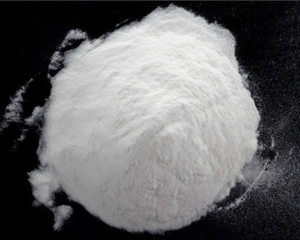
Polyanionic Cellulose (PAC) is a high-performance water-soluble polymer used in offshore oil drilling as a critical fluid-loss reducer and viscosifier in water-based muds. It stabilizes shale, improves cuttings suspension, and functions effectively in high-temperature, high-salt environments, reducing wellbore instability and improving drilling efficiency.
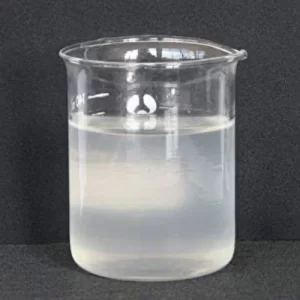
Sodium silicate is a crucial, eco-friendly additive in the oil and gas industry, primarily used for wellbore stabilization, cement modification, and water shut-off in high-permeability zones. It acts as a shale inhibitor, sealant for lost circulation. It accelerates cement setting and enhances borehole strength.
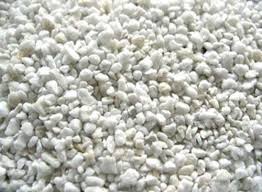
Integrating perlite into the cement composition increased its strength, leading to an 88% improvement in compressive strength compared to the base cement. The inclusion of perlite particles resulted in a 30% reduction in the viscosity. Furthermore, the addition of perlite decreased the cement permeability by 66%. Additionally, perlite effectively minimized the particles settling along the cement column to a minimal percentage of 0.1%.